
Castagnaccio is a traditional Tuscan chestnut flour cake made with simple ingredients such as chestnut flour, raisins, pine nuts, walnuts, rosemary, water, and extra virgin olive oil.
Unlike a typical cake, Castagnaccio contains no eggs, butter, or yeast. It is thin, moist, and dense rather than soft and fluffy, with the naturally sweet, earthy flavor of chestnut flour at the center of the recipe. Raisins add sweetness, while pine nuts, walnuts, rosemary, and olive oil give it its distinctive rustic flavor.
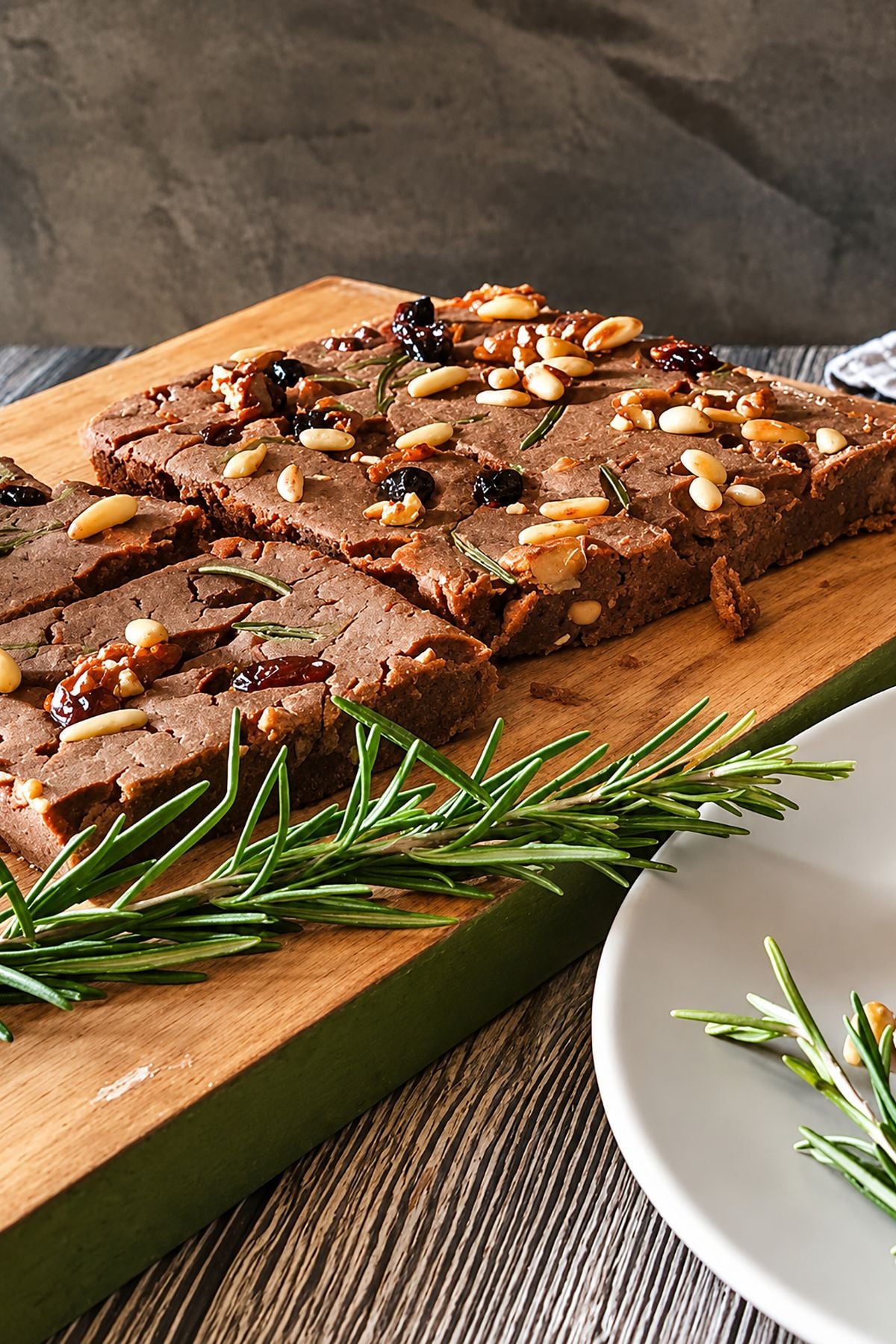
Castagnaccio has very old roots in Tuscany, where it was traditionally a humble dish made in areas where chestnuts were an important source of food. The simplest versions were prepared with little more than chestnut flour, water, olive oil, and rosemary, while raisins and nuts made the cake richer.
Today, Castagnaccio is still one of Tuscany's most characteristic autumn desserts. Enjoy it warm or at room temperature, on its own or with a glass of Vin Santo, for a true taste of Tuscan tradition.
Jump to:
Ingredients
Prep Time: 20 Min | Cook Time: 35 Min | Servings: 6-8
For a 30 × 20 cm (12 × 8-inch) baking pan
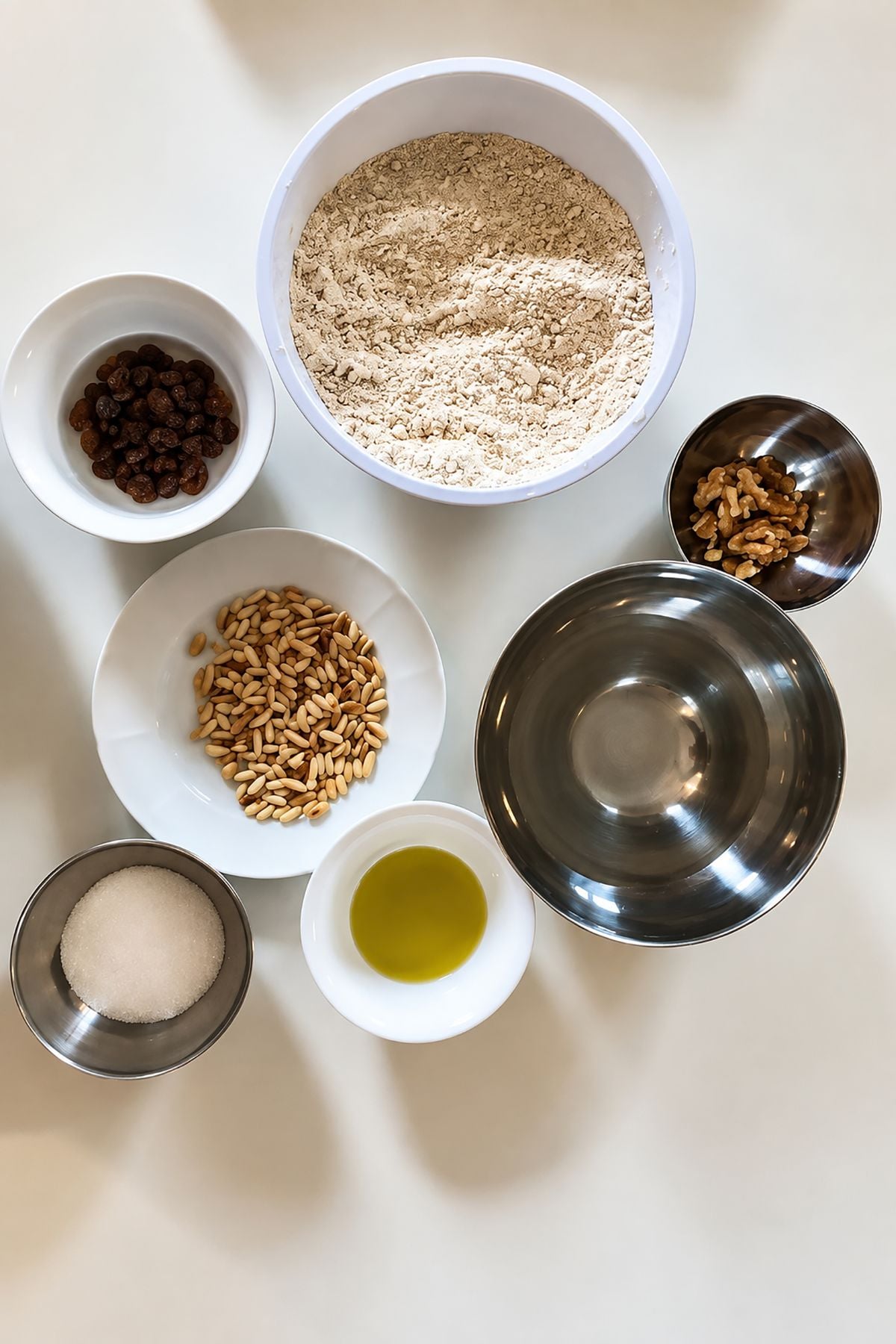
- 300 g (10.6 oz) chestnut flour
- 380 ml (1½ cups + 2 tablespoons) cold water
- 4 tablespoons granulated sugar, optional
- 2 tablespoons extra virgin olive oil, plus more for the pan and topping
- 2 tablespoons raisins
- 2 tablespoons pine nuts
- 2 tablespoons walnut kernels, roughly chopped
- 2 sprigs fresh rosemary
- A pinch of salt
How to Make Castagnaccio
Prepare the Raisins and Chestnut Flour
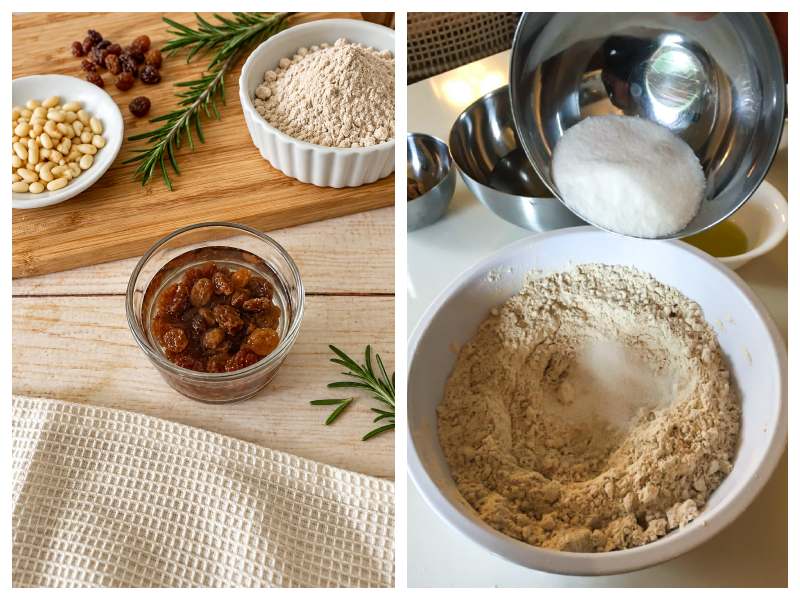
Step 1) - Soak the raisins in lukewarm water for about 10 minutes to soften them.
Meanwhile, sift the chestnut flour into a large bowl. Add the salt and, if you prefer a sweeter Castagnaccio, the optional sugar.
Chestnut flour is naturally sweet, so you can leave the sugar out for a more traditional flavor.
Make the Batter

Step 2) - Add the extra virgin olive oil, then gradually pour in the cold water while whisking continuously.
Continue whisking until you have a smooth, lump-free, fluid batter. It should pour easily but still have a creamy consistency.
Drain the raisins well and gently squeeze out any excess water.
Add the Nuts and Toppings

Step 3) - Add about half of the raisins, pine nuts, and chopped walnuts to the batter and stir to combine.
Preheat the oven to 180°C (350°F).
Generously grease a 30 × 20 cm (12 × 8-inch) baking pan with extra virgin olive oil, then pour in the batter and spread it evenly. Castagnaccio should be relatively thin, rather than thick like a traditional cake.
Scatter the remaining raisins, pine nuts, and walnuts over the surface. Add the rosemary needles and finish with a drizzle of extra virgin olive oil.

Step 4) - Bake at 180°C (350°F) for about 35 minutes, or until the surface looks dry and develops the characteristic fine cracks.
Remove the Castagnaccio from the oven and let it cool in the pan before slicing.
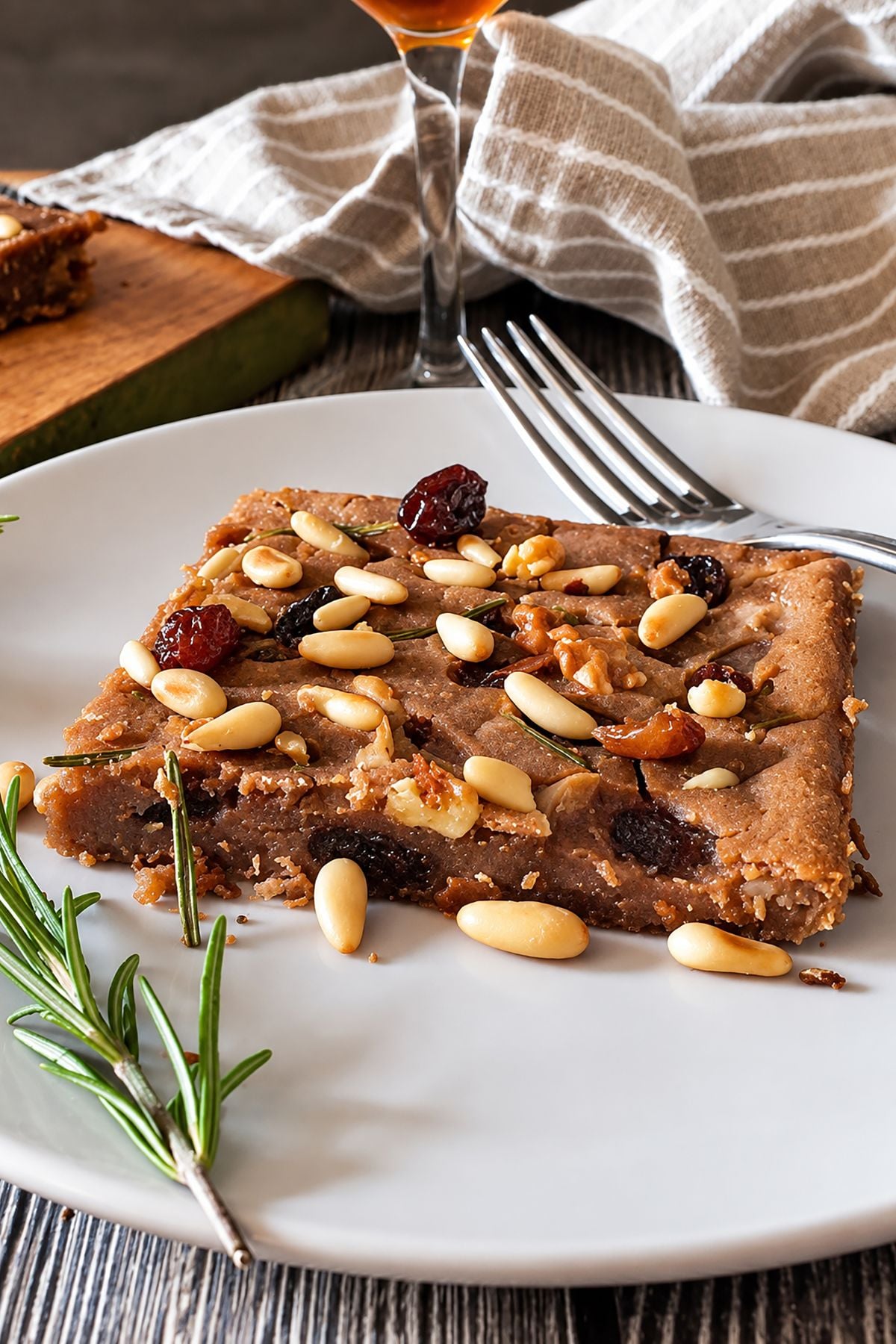
Serve it warm or at room temperature.
Tips for Perfect Castagnaccio
Use good-quality chestnut flour. This is the most important ingredient in Castagnaccio, so its flavor makes a big difference. Fresh chestnut flour should taste naturally sweet and nutty, without any bitter or stale notes.
Sift the flour before adding the water. Chestnut flour tends to form lumps easily. Sifting it first and adding the water gradually while whisking will give you a smoother batter.
Check the consistency of the batter. It should be smooth, fluid, and easy to pour, but not watery. Chestnut flour can absorb slightly different amounts of liquid depending on the brand and how it has been stored, so add the last part of the water gradually if necessary.
Keep Castagnaccio relatively thin. This is not a tall, fluffy cake. A thin layer helps create the characteristic moist, dense texture and allows the surface to develop its traditional cracks while baking.
Add sugar only if you really need it. Good chestnut flour is naturally sweet, and traditional Castagnaccio is often made without added sugar. Taste the flour before preparing the batter and adjust according to your preference.
Don't overbake it. Castagnaccio should remain moist inside. It is ready when the surface looks dry and begins to develop fine cracks. Baking it for too long can make it dry and firm.
Let it rest before slicing. Once out of the oven, allow Castagnaccio to cool in the pan. Its texture settles as it cools, and the flavors of chestnut, rosemary, olive oil, raisins, and nuts become more harmonious.
Castagnaccio Variations
Castagnaccio is a very old and rustic recipe, so the exact ingredients can vary from one area of Tuscany to another and from family to family.
Without sugar. The most traditional versions contain no added sugar at all. Good chestnut flour is naturally sweet, so you can simply leave the sugar out if you prefer a more authentic, less sweet flavor.
With Vin Santo. For extra flavor, soak the raisins in warm water with a tablespoon of Vin Santo before adding them to the batter.
With different nuts. Pine nuts and walnuts are the most common additions, but some local and modern versions use hazelnuts instead.
With orange zest. A little finely grated orange zest pairs beautifully with chestnut flour and gives Castagnaccio a fresher, more aromatic flavor. This is a variation rather than part of the most traditional Tuscan recipe.
You can also keep Castagnaccio very simple, using just chestnut flour, water, extra virgin olive oil, rosemary, and a pinch of salt.
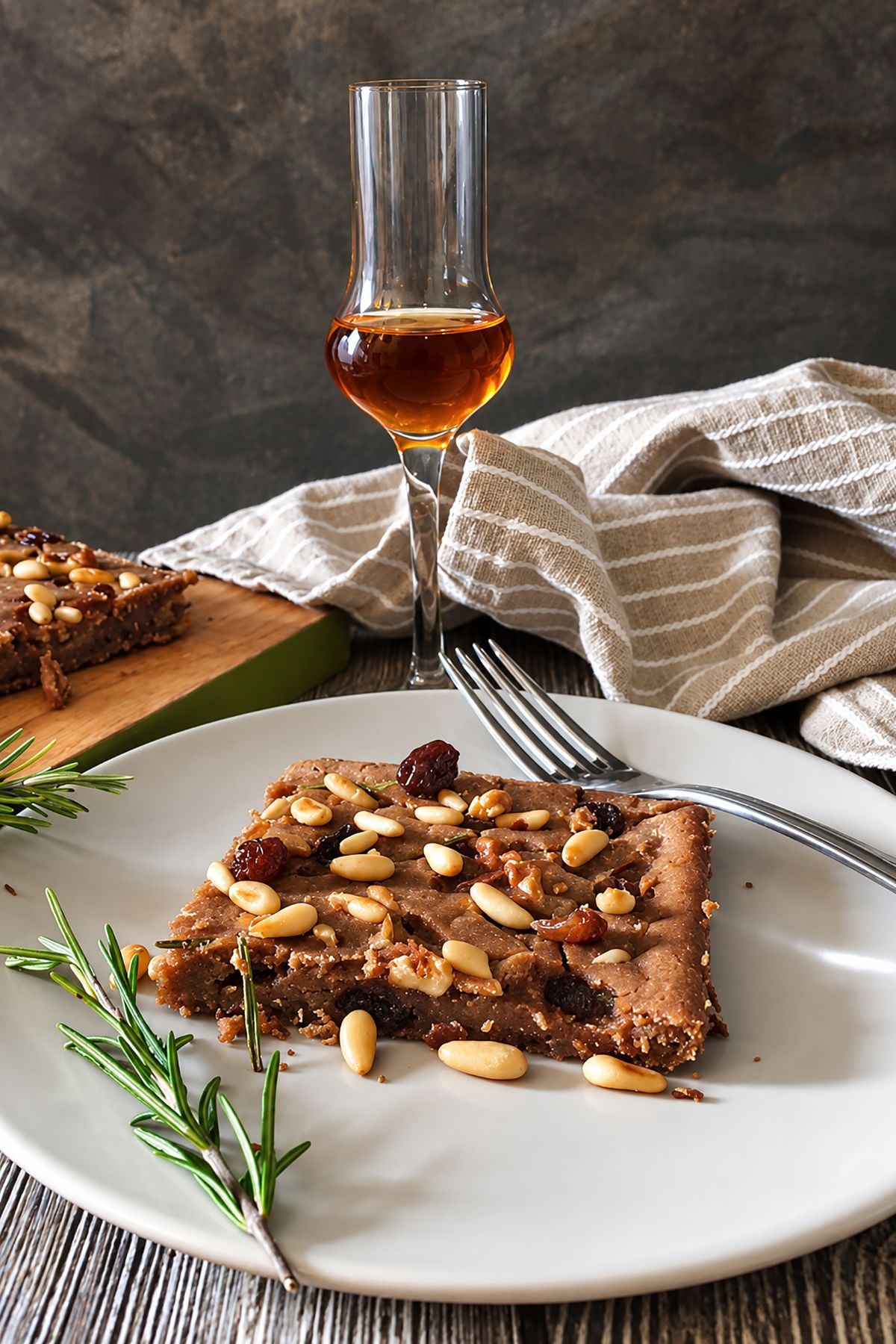
How to Serve Castagnaccio
Castagnaccio is delicious warm, at room temperature, or even cold. After baking, let it rest for a while so the texture can settle before slicing.
Traditionally, it is often enjoyed on its own, but its earthy chestnut flavor pairs especially well with fresh ricotta. The mild creaminess of the ricotta balances the intense flavor of the chestnut flour and rosemary.
You can also serve it with a drizzle of chestnut honey, whose deep, slightly bitter flavor complements the natural sweetness of Castagnaccio without making it overly sweet.
For a classic Tuscan pairing, serve Castagnaccio with a small glass of Vin Santo. It is also excellent with coffee or as a simple afternoon snack during the colder months.
Because Castagnaccio is naturally dense and not very sweet, serve it in relatively small pieces rather than large cake slices.
Storage
Store Castagnaccio in an airtight container at room temperature for up to 2 days, preferably in a cool place.
For longer storage, keep it in the refrigerator for up to 4 days. Let it come back to room temperature before serving, so the texture becomes softer and the flavors are more pronounced.
You can also freeze Castagnaccio for up to 1 month. Cut it into portions, wrap them well, and place them in a freezer-safe container. Thaw at room temperature before serving.
If refrigerated, Castagnaccio may become slightly firmer, but this is normal because of its dense texture and the chestnut flour.
Origins and History of Castagnaccio
Castagnaccio has very ancient roots and is closely connected to the rural and mountain areas of Tuscany, where chestnuts were once an essential part of the local diet.
For centuries, chestnut trees provided food to communities living in the Tuscan Apennines, especially when wheat was scarce or too expensive. Dried chestnuts could be ground into a naturally sweet flour and used throughout the year to make bread, polenta, pasta, and simple cakes. For this reason, the chestnut tree was often known as the “bread tree.”
Castagnaccio was already well known in Tuscany in the 16th century. A curious reference appears in a work published in Venice in 1553 by Ortensio Lando, which mentions a certain Pilade da Lucca as the first person to make castagnazzi. Although this cannot prove that he actually invented the recipe, it is one of the oldest written references associated with Castagnaccio.
The earliest versions were much simpler than the cake we know today, made mainly with chestnut flour, water, olive oil, and salt. Over time, ingredients such as raisins, pine nuts, walnuts, and rosemary made the recipe richer, while regional and family variations developed throughout the Apennine areas.
There is also an old Tuscan legend linked to the rosemary used on top of Castagnaccio: it was said to have the power of a love potion, and that a young man who ate a slice offered by a girl would fall in love with her.
Today, Castagnaccio remains one of the most distinctive autumn recipes of Tuscan tradition.
More Italian Recipes with Chestnuts
Discover how chestnuts are used in both sweet and savory Italian dishes:
- Necci Recipe – Thin pancakes made with chestnut flour, traditionally filled with ricotta or chocolate. A rustic treat from Tuscany.
- Chestnut Gelato - Creamy and rich, this gelato highlights the sweet, nutty flavor of chestnuts in a refreshing dessert.
- Italian Speck Wrapped Chestnuts – A quick and elegant appetizer where smoky speck balances the natural sweetness of chestnuts.
- Roast Pork with Chestnuts – A hearty main course, perfect for autumn and winter, where tender pork pairs beautifully with roasted chestnuts.
Recipe Card
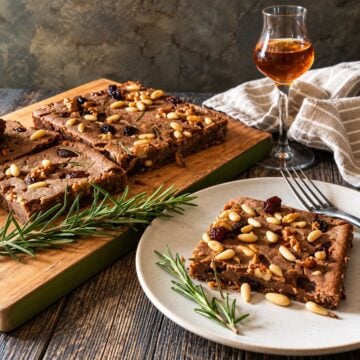
Castagnaccio Recipe (Tuscan Chestnut Flour Cake)

Ingredients
- 300 g chestnut flour - 10.6 oz
- 380 ml cold water - 1 ½ cups + 2 tablespoons
- 4 tablespoons granulated sugar - optional
- 2 tablespoons extra virgin olive oil - plus more for the pan and topping
- 2 tablespoons raisins
- 2 tablespoons pine nuts
- 2 tablespoons walnut kernels
- 2 sprigs rosemary
- 1 pinch salt
Instructions
- Soak the raisins in lukewarm water for about 10 minutes to soften them.
- Meanwhile, sift the chestnut flour into a large bowl. Add the salt and, if you prefer a sweeter Castagnaccio, the optional sugar.Chestnut flour is naturally sweet, so you can leave the sugar out for a more traditional flavor.
- Add the extra virgin olive oil, then gradually pour in the cold water while whisking continuously.Continue whisking until you have a smooth, lump-free, fluid batter. It should pour easily but still have a creamy consistency.
- Drain the raisins well and gently squeeze out any excess water. Add about half of the raisins, pine nuts, and chopped walnuts to the batter and stir to combine.
- Preheat the oven to 180°C (350°F).Generously grease a 30 × 20 cm (12 × 8-inch) baking pan with extra virgin olive oil, then pour in the batter and spread it evenly. Castagnaccio should be relatively thin, rather than thick like a traditional cake.
- Scatter the remaining raisins, pine nuts, and walnuts over the surface. Add the rosemary needles and finish with a drizzle of extra virgin olive oil.
- Bake at 180°C (350°F) for about 35 minutes, or until the surface looks dry and develops the characteristic fine cracks.
- Remove the Castagnaccio from the oven and let it cool in the pan before slicing.Serve it warm or at room temperature.
Josi says
This is the third time I'm making it. Only use 2.5 tablespoons of sugar. I added 2 Tabs of flour, too and mixed in about 1/3 cup
milk in the water. It's a little richer. THANK YOU!
Edmond says
Excellent recipe. I had brought chestnut flour from Italy and it came out delicious. Could not find pine nuts, which I replaced with shredded almonds.
There are many recipes in Italian and English, but most don't give the proportions of flour to water. This one saved the day!